Compare & Decide · 5 min read
Ceramic Coating Vs Wax Vs Sealant: Which Actually Protects Your Car?
Side-by-side test of ceramic coating, paint sealant, and carnauba wax — durability, cost, gloss, and the right choice for daily drivers, weekend cars, and new vehicles.
The Rabbit Wash Team · Published May 14, 2026 · Updated Sep 21, 2026
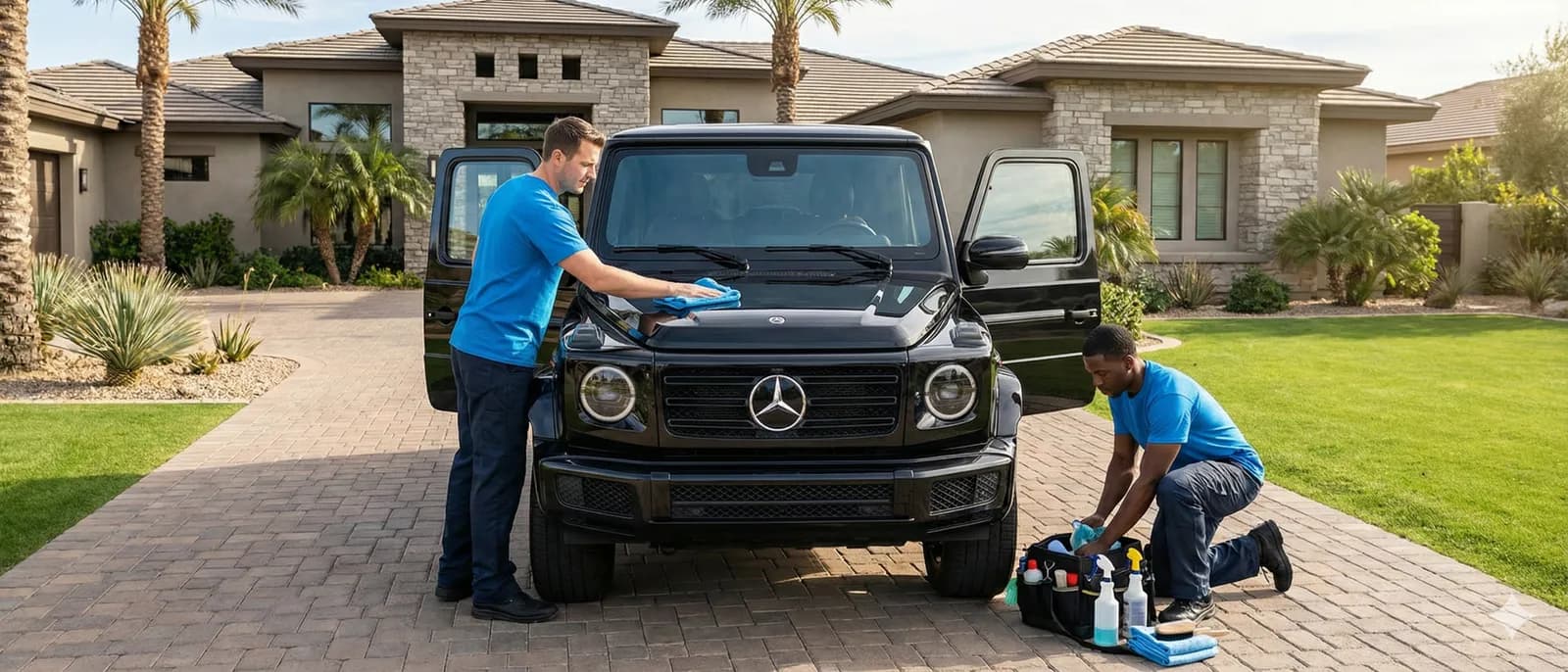
Walk into any detail shop in 2026 and you will hear the same pitch: ceramic coating is the gold standard. That is mostly true, but it is not the whole story. Wax and paint sealant still have a place — sometimes a better one — depending on what you actually want from your car.
This guide breaks down the three protection categories in plain terms: real-world durability, what each one actually does at the chemistry level, how the costs compare, and the situations where each one wins.
What Each One Actually Is
Carnauba Wax
A natural product derived from the leaves of the carnauba palm, blended with petroleum distillates and other waxes. It sits on top of clear coat as a soft, sacrificial layer. Lasts 6–8 weeks under daily-driver conditions.
Paint Sealant
A synthetic polymer that bonds slightly more firmly to clear coat than wax. Sealants last 4–6 months on average, with better water-spot resistance and chemical resistance than wax. They typically lack the warm "wet" glow waxes give but produce a harder, sharper reflection.
Ceramic Coating
A semi-permanent silica-based (SiO₂) solution that chemically bonds to the clear coat, forming a glass-like layer measured in microns. Professional-grade coatings are rated in years rather than months, are far harder than wax or sealant, and produce strong water beading (hydrophobicity).
Side-By-Side Comparison
Here is how the three stack up on what matters most:
| Factor | Carnauba Wax | Paint Sealant | Ceramic Coating |
|---|---|---|---|
| Durability | Weeks | Months | Years |
| Hydrophobicity | Moderate | Good | Excellent |
| Gloss character | Warm, deep | Sharp, glassy | Glassy + depth |
| UV protection | Low | Medium | High |
| Chemical resistance | Low | Medium | High |
| Scratch resistance | None | None | Marginal (resists swirls, not rock chips) |
| Upfront cost | Lowest | Low to medium | Highest (professional install) |
| Reapplication labor | 1–2 hours | 2–3 hours | None for years |
Where The Gloss Difference Actually Comes From
A common myth is that ceramic coatings produce "better" gloss than wax. The truth is they produce different gloss. Carnauba waxes refract light in a softer, warmer way — they look stunning on darker colors like deep blue, black, and burgundy at concours shows. Ceramic coatings give a sharper, mirror-like reflection that emphasizes contrast.
If your paint has swirl marks or oxidation, no protection product will fix them. That is what paint correction / polishing is for — applied before any coating goes down.
The Math Of "Ceramic Is Expensive"
A professional ceramic coating costs far more upfront than a wax or a sealant, and that number scares people off. But spread it over the years it lasts:
- A wax needs reapplying every couple of months.
- A sealant needs reapplying a few times a year.
- A ceramic coating needs maintenance washes, not reapplication, for years.
If you keep the car for several years, the per-year cost of ceramic can come out lower than repeated professional waxing — and it needs far less labor in between.
When Wax Still Wins
Don’t dismiss wax. There are three scenarios where it is still the right call:
- Show cars and weekend classics. Carnauba glow on a hand-polished classic is part of the aesthetic. Ceramic looks "wrong" on a 1967 Mustang.
- Brand-new cars in the dealer plastic window. Many owners want to wait 60–90 days for paint to fully cure before committing to a ceramic. A wax bridges the gap.
- Cars being sold within 6 months. If you’re flipping the vehicle, a fresh wax produces immediate showroom appeal at minimal cost.
When Sealant Is The Smart Middle Ground
Sealant is underrated. It’s the right pick for:
- Owners who want 4–6 months of protection but aren’t ready for ceramic’s upfront cost.
- Leased vehicles — a few sealant applications cover a whole lease for a modest total cost.
- Outdoor-parked cars where chemical resistance matters more than longevity.
When Ceramic Is The Obvious Answer
Choose a professional ceramic coating when:
- You own (or are buying) the car for 3+ years.
- It’s a new or near-new vehicle with healthy clear coat.
- You park outdoors regularly and want UV / acid rain / bird-dropping defense.
- You hate washing — coatings cut wash time roughly in half because dirt doesn’t bond.
The Rabbit Wash's Ceramic Coating is booked together with a Wash & Detail package, because coating bonds to clean clear coat only. Skipping the prep is a common reason ceramic jobs fail early.
What About "Ceramic Spray" Products?
Spray-on ceramic products (sometimes called "SiO₂ spray sealants") sit between sealant and true ceramic coatings. They last a few months and produce decent water beading. They’re a great boost between washes — but they are not a substitute for a professional coating job. The Rabbit Wash offers a Hydro Ceramic Spray as an add-on for owners who want that middle tier.
Which To Choose, By Use Case
- Brand new car, 3+ year hold: Ceramic coating after a 60-day cure window.
- Used car, daily driver: Paint correction + ceramic. The correction is the bigger value.
- Leased car: Sealant every 4 months. Cheaper, no commitment.
- Garaged weekend car: High-end carnauba wax every 6–8 weeks. The look is worth it.
- Black or dark-colored daily: Ceramic — swirl resistance matters most on dark paint.
The Honest Bottom Line
Ceramic coating is the right answer for most modern car owners who plan to keep their vehicle three or more years. It costs more upfront, lasts far longer, and can lower the total cost of paint care over time. But wax and sealant are not obsolete — they’re just for different goals.
If you’re unsure which fits your situation, start with how long you’ll keep the car and where it’s parked. You can see ceramic coating, paint polish and paint protection film, or compare every package.
Frequently Asked Questions
How long does ceramic coating last vs wax?
A carnauba wax lasts weeks, a paint sealant lasts months, and a professional ceramic coating is rated in years. Real-world durability depends on the product, how the car is washed and where it is parked.
Is ceramic coating worth the money?
For owners keeping their car three or more years, yes — ceramic costs less per year than repeated wax applications. For lease holders or short-term ownership, sealant is usually the smarter financial choice.
Can you wax over ceramic coating?
You can, but you shouldn’t. Wax sits on top of the coating and adds nothing — it just temporarily hides the coating’s water-beading. A dedicated ceramic boost spray is the right top-up product.
Does ceramic coating prevent scratches?
Ceramic coating reduces light swirl marks from washing but does not stop rock chips, key scratches, or impact damage. For impact protection, paint protection film (PPF) is the right product.
Related Articles
Compare & Decide
How To Choose A Mobile Detailer In Los Angeles (7 Things To Check)
The best mobile detailer in Los Angeles is the one that is insured, uses paint-safe products, brings their own water, has clear pricing, and shows real before/after photos. Here are the seven things to verify before booking anyone.
May 24, 2026 · 5 min read
Compare & Decide
Is A Mobile Car Wash Worth It In Los Angeles? An Honest Answer
For many LA drivers, yes. You get the drive and the wait back, and a careful hand wash is kinder to paint than brushes. Here's an honest breakdown of when mobile wins and when a tunnel wash is fine.
May 24, 2026 · 5 min read
Compare & Decide
Mobile Vs Traditional Car Wash: Which Is Better For Your Car?
A careful mobile hand wash is kinder to paint, cleans the inside too and saves you the trip. A tunnel wash is faster and cheaper per visit. The honest comparison depends on your vehicle, your schedule and how much you care about long-term paint condition.
May 24, 2026 · 5 min read