
Detailing Guides · 5 min read
How To Remove Pet Hair From Your Car (Step-By-Step Guide)
A pro detailer’s 6-step method to remove deeply embedded pet hair from car seats, carpets, and trunks — including the rubber-glove trick that beats every gadget on the market.
The Rabbit Wash Team · Published May 16, 2026 · Updated Sep 21, 2026
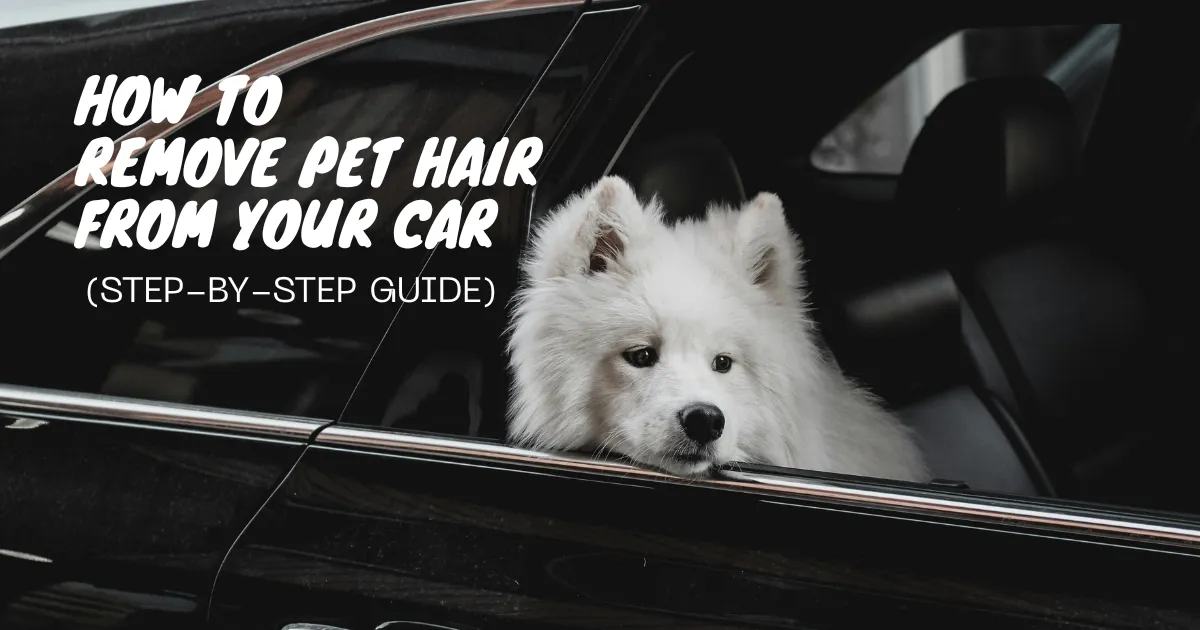
Pet hair is the single hardest contaminant to remove from car interiors. It weaves into fabric, statics itself into vents, and re-deposits every time you open a door. Standard vacuuming only gets the loose layer — the bonded hair stays put.
This guide walks you through the method professional detailers use, step by step. No expensive gadgets required.
What You’ll Need
- A vacuum with a strong, narrow attachment (shop vac if you have one)
- A pair of rubber dish gloves (the secret weapon)
- A spray bottle with diluted fabric softener (1 part softener to 10 parts water) or distilled water
- A stiff-bristled brush (not metal)
- A microfiber towel
- Optional: a pumice stone for stubborn carpet hair, a lint roller for finishing
The 6 Steps, In Order
Order matters. Doing this out of sequence either pushes hair deeper into fabric or wastes the spray solution.
Step 1 — Vacuum What’s Loose First
Start with a thorough pass with the vacuum. Use a narrow attachment and work slowly, lifting in one direction only (rear to front for carpets, side to side for upholstery). Don’t bother trying to get the bonded hair yet — this pass is for whatever lifts easily. Skipping this step means you’ll redistribute loose hair across surfaces you just cleaned.
Step 2 — Mist The Surface
Lightly mist the area with your fabric softener / water solution. The goal is damp, not wet. The fabric softener neutralizes the static charge that bonds hair to fibers — this is the chemistry behind why pro detailers swear by this step.
On leather or vinyl seats, use plain distilled water — no softener.
Step 3 — The Rubber Glove Pass
This is the move that beats every $30 "pet hair brush" sold on Amazon. Put on a rubber dish glove and rub the damp surface in short, single-direction strokes. The rubber generates a static charge that lifts embedded hair out of the fabric into clumps.
You’ll watch hair collect into tumbleweeds within seconds. Brush each clump into a pile, then pick up by hand or vacuum.
Re-mist if the surface dries out. Move from front to back, working each panel methodically.
Step 4 — Stiff Brush On Stubborn Spots
For deeply embedded hair (typically in floor carpets where pets bed down), follow the glove pass with a stiff-bristled brush in the same single direction. The brush gets the last 5–10% that the glove couldn’t lift.
For very compacted hair in floor mats, a pumice stone works well — but only on rubber or polyester floor mats, never on carpet.
Step 5 — Final Vacuum Pass
Vacuum everything one more time. The fabric is now damp, so use a wet-dry vac if you have access to one. This pass picks up everything you loosened in steps 3 and 4.
Step 6 — Lint-Roll The Trim And Edges
Hair always migrates to seat seams, door jambs, and the gap between the seatback and the cushion. A standard lint roller handles these final spots in a minute. Don’t skip seat belts — hair embeds into the woven webbing surprisingly easily.
What About Really Severe Cases?
If you have multiple dogs that ride daily and the hair is matted into carpet fibers like felt, a single DIY pass won’t cut it. You need a steam clean followed by an extraction shampoo. The heat from steam swells carpet fibers and releases the matted hair, and the extraction shampoo pulls everything out with hot-water suction.
Steam cleaning and carpet shampoo are both part of the Rabbit Showroom Full Detail, and you can add Heavy Pet Hair Removal, Seat Shampoo, Carpet Shampoo or Steam Cleaning to any package as add-ons.
What Doesn’t Work (Despite The Ads)
- Vacuums with rotating brush heads. They wind hair up but rarely lift bonded strands.
- Most "pet hair detail tools" sold online. The cheap rubber-tipped brushes work, but no better than a dish glove.
- Spraying with regular water. Water alone doesn’t neutralize static — fabric softener does.
- Compressed air. It just blows hair into vents and other panels.
Preventing The Next Round
If your pet rides regularly, a few changes make every clean easier:
- Cover seats with a removable, machine-washable seat cover.
- Brush your dog or cat before rides, not after — shedding hair clings less to skin oils that way.
- Vacuum lightly once a week instead of waiting for a heavy buildup.
- Keep a dish glove in the glovebox for between-detail touch-ups.
How Long Should This Take?
For a normal daily driver with a single shedding dog riding once a week: about 45 minutes for the full process across rear seats, cargo area, and floor mats. For a severe case (multiple pets, weeks of accumulated hair), expect 2–3 hours — at which point it’s usually faster to book a Heavy Pet Hair Removal add-on and skip the labor.
The Takeaway
You don’t need expensive tools to remove pet hair properly — you need the right sequence and a $1 pair of rubber gloves. Static is the actual enemy, and neutralizing it is the trick every detail shop learned the same way: by trying every gadget on the market and ending up back at the dish glove.
If your case is severe or you just don’t want to spend a Saturday on it, book a wash with a pet hair add-on and a Rabbit comes to your driveway.
Frequently Asked Questions
What is the best tool to remove pet hair from a car?
A rubber dish glove combined with a light mist of diluted fabric softener outperforms every commercial pet-hair tool. The rubber generates static that lifts embedded hair out of fabric.
Does fabric softener really help?
Yes. Pet hair bonds to fabric through static. Fabric softener neutralizes that charge, so embedded hair releases far more easily during the rubber-glove pass.
How do you get pet hair out of car carpet?
Vacuum loose hair first, mist lightly, rub with a rubber glove, then a stiff brush, then vacuum again. For severe cases, a steam clean plus extraction shampoo is the only complete solution.
How long does it take to remove pet hair from a car?
A normal weekly-rider takes about 45 minutes with the DIY method. Severe cases with multiple pets can take 2–3 hours and are often faster to book as a pet hair removal service.
Related Articles
Detailing Guides
Interior Car Detailing Checklist: 12 Steps To A Showroom-Clean Cabin
The complete interior detailing checklist used by professional detailers — twelve steps in the right order, plus the cleaning agents that ruin specific materials.
May 22, 2026 · 5 min read
Car Care
Best Time Of Day To Wash Your Car In Southern California
Early morning (6–9 AM) is the best time to wash your car in Southern California. Cool surface temps prevent water spots, low UV protects soap chemistry, and your wax cures properly. Avoid washing between 11 AM and 4 PM during summer.
May 24, 2026 · 5 min read
Car Care
How Much Does Mobile Car Detailing Cost In Los Angeles?
What sets the price of a mobile car wash or detail in Los Angeles: the package, your vehicle's size, the extras you add, travel and cancellation terms, and whether you book once or monthly. The Rabbit Wash's current prices are on its packages page.
May 24, 2026 · 4 min read