Beyond Cars · 5 min read
Mobile Boat Detailing In Marina Del Rey, Newport, & Long Beach
What professional boat detailing covers, how often your hull and gelcoat need attention, and what mobile dockside service costs on the Southern California coast.
The Rabbit Wash Team · Published May 23, 2026 · Updated Sep 21, 2026
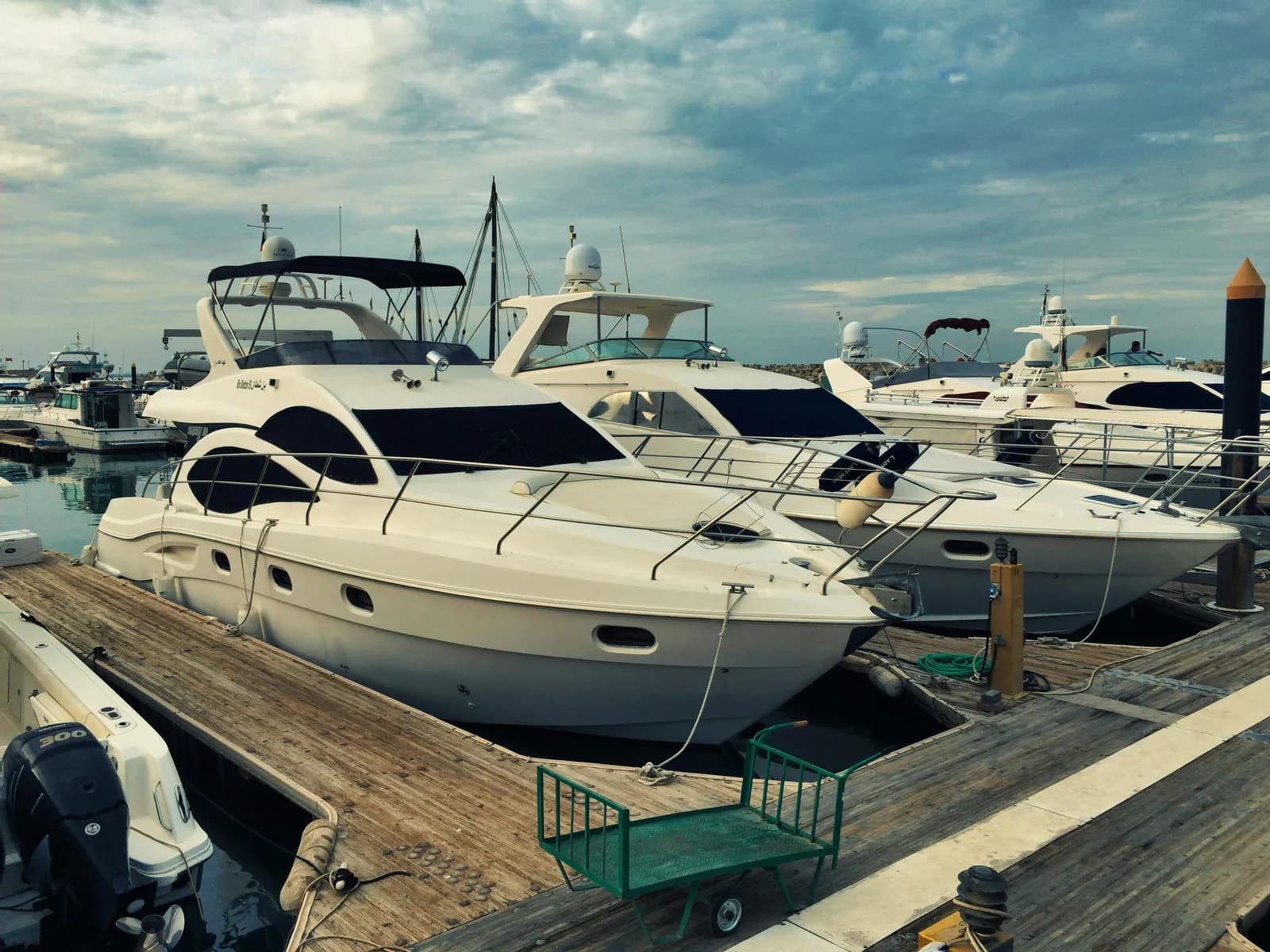
A neglected hull turns chalky within a season. Gelcoat oxidizes faster than automotive clear coat because it lives in saltwater, UV, and bird droppings — three of the most aggressive environments any painted surface can face. By the time the white sheen of fresh fiberglass goes flat, you’re looking at compound polishing instead of a simple wash.
This guide explains what mobile boat detailing actually covers, a sensible cadence for Southern California boaters, and how to choose between maintenance washes and a full restoration. The Rabbit Wash takes boat detailing requests by quote in the areas it serves, including Marina del Rey, Redondo Beach, San Pedro, Long Beach and Newport Beach.
Why Boats Need Different Treatment From Cars
Most boat owners assume detailing is just a "bigger car wash." It’s not. The chemistry and the surfaces involved are different:
- Gelcoat, not paint. The white finish on most fiberglass boats is a polymer resin layer, not automotive clear coat. It oxidizes from the surface down and requires compound polishing to restore — not just polish.
- Salt is corrosive. Stainless steel rails, aluminum stanchions, and even the underwater hardware all corrode much faster than anything on a car.
- Teak and vinyl interiors. Boat interiors mix marine-grade vinyl with teak decking and stainless trim — each material wants a different cleaner.
- The waterline. The strip of hull that sits at the waterline collects algae, slime, and chemical stains from harbor water. It needs specialized acidic cleaners that have no place on automotive paint.
What A Proper Boat Detail Includes
Exterior Wash And Rinse
Fresh-water rinse, marine soap (boat-specific — automotive soap strips gelcoat sealants), soft-bristle scrub on non-skid areas, hand-wash on smooth surfaces. Heavy salt deposits get a dedicated salt-neutralizing rinse before soap touches the hull.
Waterline And Hull Cleaning
The waterline collects scum and algae rings within weeks. A marine hull cleaner (often oxalic-acid based) is brushed on, left to dwell and rinsed — never left to dry on gelcoat. Severe staining requires multiple passes or wet-sanding.
Oxidation Removal And Gelcoat Polishing
This is the heaviest service. Faded, chalky gelcoat is restored through stages: heavy compound, medium compound, fine polish, and finishing wax or sealant. A 40-foot vessel takes a full day for the full polish sequence. On a well-maintained boat it’s an every-12-month job; on a neglected one it can become every-3-month.
Stainless And Aluminum Care
Polishing rails, cleats, anchor windlasses, and aluminum mast bases prevents pitting. A marine-grade metal polish and a protective wax slow that down.
Teak Care
Teak decking needs cleaning across the grain to lift dirt without raising the grain. Avoid the bleach and caustic-cleaner combination — it strips the natural oils and speeds up greying. A proper two-part teak cleaner followed by teak oil keeps the wood honey-colored.
Interior Cabin
Marine vinyl wipe-down, headliner spot cleaning, glass and isinglass treatment (isinglass scratches easily — never paper towels), galley wipe-down, head sanitization. Carpets and rugs get steam cleaned and dried before reinstall.
How Often To Detail Your Boat
The honest cadence for SoCal boaters who use their vessel:
- Every trip: Fresh-water rinse the same day, especially the underside of cleats and the engine cover.
- Every 4–6 weeks: Full exterior wash, waterline scrub, dry-down with marine chamois.
- Every 6 months: Light polish or sealant top-up, isinglass and vinyl treatment, teak oil if applicable.
- Annually: Heavy oxidation removal if needed, compound + polish + ceramic sealant, full interior deep clean.
Skipping any of these stretches the timeline of the next bigger job. A boat that hasn’t been polished in three years usually needs wet-sanding to recover the gelcoat — a four-figure job that a yearly polish would have prevented entirely.
Ceramic Coating For Boats
Marine-grade ceramic coatings have improved dramatically in the last few years. A properly applied ceramic on freshly polished gelcoat:
- Outlasts wax and sealant in saltwater service.
- Makes routine rinses far more effective — most contaminants sheet off.
- Costs more upfront, and can save on restoration work over the years you own the boat.
Ceramic is not for every boat. It needs healthy gelcoat to bond. A chalked-out hull needs to be restored first through compound and polish before ceramic is even considered.
Mobile Service Vs Hauling Out
For above-the-waterline work — exterior wash, polish, interior, metalwork — mobile service in your slip is usually faster and cheaper than hauling out, provided your marina allows outside vendors. The detailer brings the water, power and marine-specific products.
For below-the-waterline work (bottom paint, prop work) you’ll still need a haul-out.
Where The Rabbit Wash Takes Boat Requests
Boat detailing is quoted for boats kept in or near the cities The Rabbit Wash serves, including:
- Marina del Rey (Marina del Rey Harbor)
- Redondo Beach (King Harbor)
- San Pedro (Cabrillo Marina)
- Long Beach (Alamitos Bay Marina)
- Newport Beach (Newport Harbor)
Trailered boats can be done wherever they're parked, if the property allows it. See every city on Service areas.
How It's Priced
Boats are priced by length, condition and the work you want. Boats over 50 feet are quoted after a dockside walk-through, so include photos with your request.
What To Ask Before Booking Any Boat Detailer
- Do you carry marine-specific products (not automotive)?
- Are you insured for in-marina work, and does your insurance meet the marina's vendor rules?
- What’s your process for compounding gelcoat vs polishing?
- How do you handle isinglass and vinyl?
- Do you provide a written estimate before starting?
If any answer hesitates, find a different detailer. Boat surfaces are unforgiving — a wrong compound can take gelcoat down to the fiberglass mat in one careless pass.
Request A Boat Quote
Request a boat detailing quote with the length, make and model, where the boat is kept and a few photos of the hull. A proper detail can recover a lot on a boat that looks tired.
Frequently Asked Questions
How much does mobile boat detailing cost?
Boats are priced by length, condition and the work you want. The Rabbit Wash prices boats by quote: send the length, make and model and where the boat is kept. Boats over 50 feet are quoted after a dockside walk-through, so include photos.
How often should you detail a boat?
Fresh-water rinse every trip, full exterior wash every 4–6 weeks, polish or sealant every 6 months, and a full compound polish annually. Boats kept on saltwater year-round need more frequent attention than dry-stored vessels.
Can you ceramic coat a boat?
Yes. Marine-grade ceramic coatings bond to healthy gelcoat and outlast wax or sealant in saltwater. The gelcoat must be compound-polished first to remove oxidation — ceramic cannot fix a chalked hull.
Do you detail boats at the dock?
Above-the-waterline work — washing, polishing, interior and metalwork — can be done at the slip or on the trailer without a haul-out, where the marina allows outside vendors. Below-the-waterline work still needs a haul-out.
Related Articles

Beyond Cars
Aircraft & Private Jet Detailing: What Owners And Operators Need To Know
How aircraft detailing differs from cars and boats, the FAA-aware products and procedures, and what hangar-side service looks like in Van Nuys, SNA, and Long Beach.
May 23, 2026 · 5 min read
Beyond Cars
Mobile RV Detailing: The Complete Guide For Class A, B, And C Owners
Why RVs need a completely different detailing approach, the roof and oxidation work most owners skip, and what mobile service should actually cost.
May 23, 2026 · 5 min read
Beyond Cars
Motorcycle Detailing: How To Clean A Bike Without Damaging Chrome Or Paint
A pro detailer’s sequence for washing and detailing motorcycles — chrome, leather, exhaust, and the cleaning mistakes that ruin finishes faster than riding does.
May 23, 2026 · 5 min read