Beyond Cars · 5 min read
Motorcycle Detailing: How To Clean A Bike Without Damaging Chrome Or Paint
A pro detailer’s sequence for washing and detailing motorcycles — chrome, leather, exhaust, and the cleaning mistakes that ruin finishes faster than riding does.
The Rabbit Wash Team · Published May 23, 2026 · Updated Sep 21, 2026
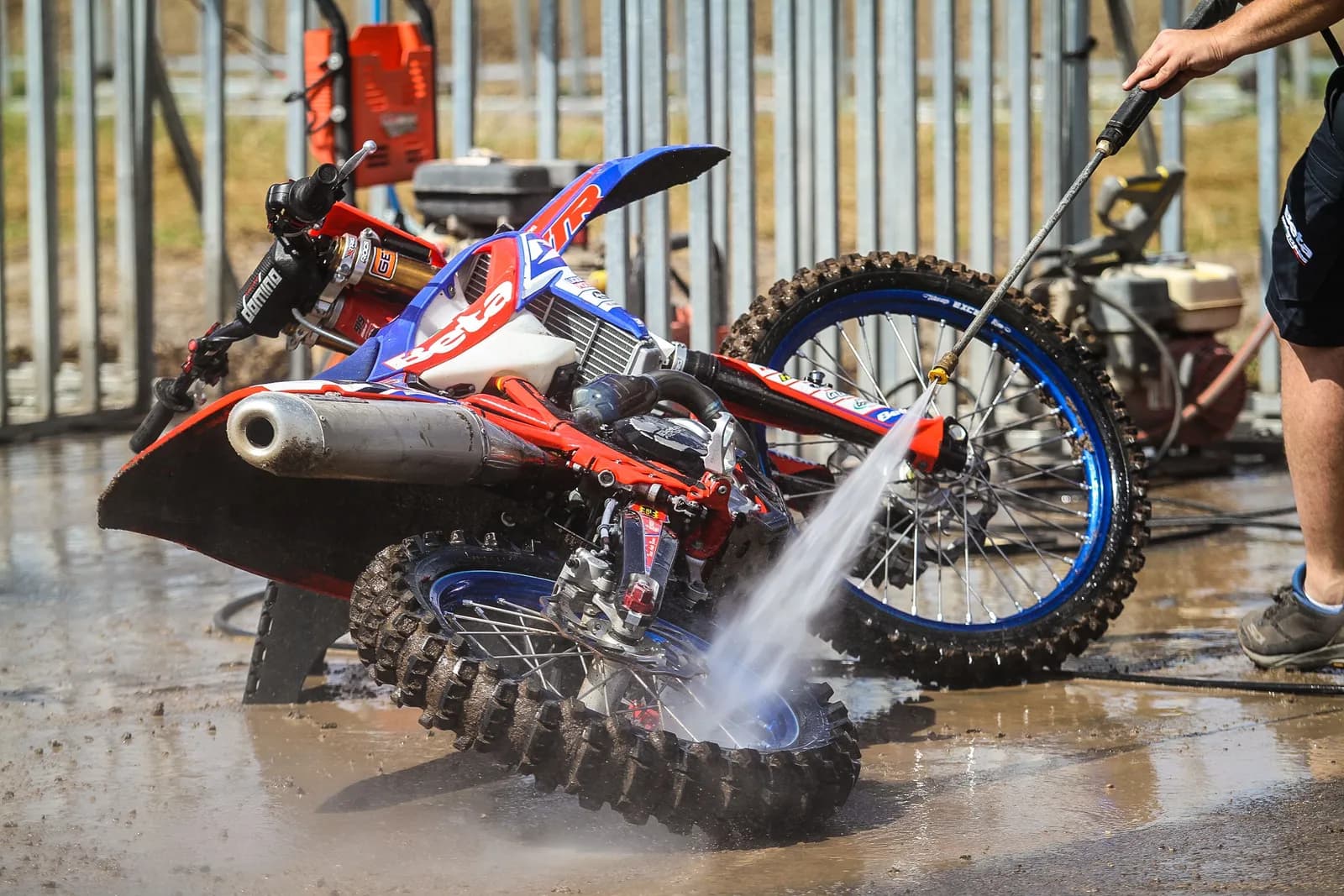
Motorcycle detailing is the most precision-heavy work in this industry. Bikes have more exposed surfaces per square foot than any other vehicle: chrome, anodized aluminum, polished stainless, matte powder coat, leather, painted plastic, and bare metal — all touching each other, all wanting different products. Use the wrong cleaner on the wrong panel and you’ll create damage no polishing can fix.
This guide walks through a proven sequence for motorcycle detailing, from a cosmetic wash to a full concours-grade detail. It works for cruisers, sport bikes, ADV, and touring rigs.
What Makes Motorcycle Detailing Different
- Mixed surfaces. A single tank panel can transition from clear-coated paint to chrome to anodized accent — each with different chemistry tolerances.
- Hot exhaust. Headers and mufflers run 400°F+ and need cool-down before anything touches them. Cleaning hot chrome stains it instantly.
- Electrical exposure. Open wiring, exposed connectors, fuel-injection sensors — all vulnerable to direct water spray.
- Leather seat care. Genuine leather seats need conditioning, not just wiping. Most bikes lose seat value because of dried-out, cracked leather.
- Chain and drivetrain. Cleaning routines for the chain are entirely separate from cosmetic detailing.
What You’ll Need
- pH-neutral motorcycle wash (NOT car wash soap — it’s too aggressive on chrome and anodized parts)
- Soft microfiber wash mitt
- Multiple clean microfiber drying towels
- Soft detail brush set (a paint brush and a wheel-spoke brush work)
- Chrome polish
- Tire and wheel cleaner (acid-free)
- Leather cleaner + conditioner (for seat)
- Plastic / vinyl protectant (matte finish only)
- Wax or sealant for painted panels
- Compressed air (canned air works for hobbyists, a small compressor for pros)
The 8-Step Sequence
1. Let The Bike Fully Cool
Park in shade for at least 60 minutes after riding. Hot chrome stains instantly when cold water hits it. Hot brake rotors warp from temperature shock. The engine, headers, and brakes all need to be touchable before any water hits the bike.
2. Pre-Rinse With Low Pressure
Low-pressure rinse to lift loose dirt — never direct stream at the air intake, the seat seam, the fuse box cover, or any exposed electrical connector. Aim down or angled. The whole pre-rinse should take 2–3 minutes.
3. Wheels And Tires First
Use acid-free wheel cleaner sprayed on, dwelled 30 seconds, then agitated with the wheel brush. Rinse before it dries. Doing wheels first means the dirt and brake-dust runoff doesn’t splash onto already-cleaned panels.
4. Body Wash — Top To Bottom
Foam motorcycle soap on a soft mitt, work top-down: tank, fairings, seat, panels, lower bodywork. Single direction strokes, never circular — circular motion is what creates swirl marks on clear-coated paint. Frequent re-rinse of the mitt in clean water (two-bucket method).
5. Detail Brush For Tight Areas
Spoke wheels, radiator fins, bolt heads, frame seams — all need a soft detail brush. Use the same soap solution. Take your time on radiator fins; they bend easily and trapped bugs need careful work.
6. Rinse, Then Immediately Dry
Full rinse top-down with low pressure. Then dry every panel within 5–10 minutes — bike paint shows water spots faster than cars because surfaces are small and you can see them from every angle. Use clean microfiber, blot don’t drag.
Compressed air is gold here — blows water out of cracks, behind levers, around the chain guard, and out of every bolt head. Pros never skip this step.
7. Chrome And Paint Care
Chrome polish on a clean microfiber, applied in small sections, buffed to a haze, then wiped clean. For painted panels: wax, sealant, or ceramic spray. Avoid putting wax on matte powder coat — it creates a permanent gloss patch.
8. Leather Seat And Trim Dressing
Wipe seat with leather cleaner, condition with leather balm — be sparing, the seat will be greasy if you over-apply. Plastic and vinyl trim get a matte protectant. Never use silicone-based protectants on a seat itself; it gets dangerously slippery.
The Chain — A Different Routine
Chain cleaning is a separate process from cosmetic detailing. The general flow:
- Bike on a rear stand so the wheel spins freely.
- Spray chain cleaner along the chain length, let it dwell.
- Brush each side and the inside with a chain brush.
- Wipe down with rag while rotating the wheel.
- Apply chain lube only after the chain is fully dry — a hot chain (just-ridden) accepts lube best, so re-warm by riding a few minutes before lubing.
Frequency: every 500–600 miles for street riding, more often for wet conditions.
What Ruins Motorcycle Finishes
- High-pressure washing. Forces water into bearings, electrical connectors, and the chain’s sealed O-rings. Use low pressure only.
- Acidic wheel cleaners on chrome. Stains chrome permanently — sometimes within 30 seconds. Always read labels.
- Tire-shine on the tire sidewall but onto the tread. Reduces traction dangerously. Apply to sidewalls only.
- Silicone protectants on the seat. Makes you slip off the bike. Use leather conditioner on leather seats only.
- Leaving the bike to air-dry. Water spots etch into paint and chrome.
How Often To Detail A Motorcycle
- Quick rinse: every ride, especially after coastal or rainy rides.
- Full wash: every 2–4 weeks for daily riders.
- Full detail (wash, chrome polish, leather condition, sealant): every 2–3 months.
- Annual: full polish + ceramic spray on painted panels + leather deep conditioning.
Mobile Motorcycle Detailing Service
Most mobile car detailers will service a motorcycle if you ask, but a bike needs its own products: motorcycle-specific shampoo, chrome polish, leather products, and patience for tight-area detail work. The Rabbit Wash prices motorcycle detailing by quote, because bikes and finishes vary so much.
Book A Mobile Bike Detail
Request a motorcycle detailing quote with the make, model and year, photos of the bike and any specific concerns (matte panels, exposed wiring, lowered exhaust).
Frequently Asked Questions
Can you pressure wash a motorcycle?
No. High-pressure water forces moisture into wheel bearings, electrical connectors, and the chain’s O-rings. Always use low pressure or hand-rinse with a normal garden hose.
What kind of soap should I use on my motorcycle?
A pH-neutral motorcycle-specific shampoo. Car wash soap is too aggressive on chrome and anodized parts. Never use dish soap — it strips wax and damages clear coat.
How do I clean motorcycle chrome without scratching it?
Use a chrome-specific polish applied with clean microfiber in small sections. Buff to a haze, then wipe clean with a separate dry microfiber. Avoid abrasive cleaners or rough rags.
How often should I detail my motorcycle?
A quick rinse after each ride, a full wash every 2–4 weeks, and a complete detail with chrome polish and leather conditioning every 2–3 months for daily riders.
Related Articles
Beyond Cars
Aircraft & Private Jet Detailing: What Owners And Operators Need To Know
How aircraft detailing differs from cars and boats, the FAA-aware products and procedures, and what hangar-side service looks like in Van Nuys, SNA, and Long Beach.
May 23, 2026 · 5 min read
Beyond Cars
Mobile Boat Detailing In Marina Del Rey, Newport, & Long Beach
What professional boat detailing covers, how often your hull and gelcoat need attention, and what mobile dockside service costs on the Southern California coast.
May 23, 2026 · 5 min read
Beyond Cars
Mobile RV Detailing: The Complete Guide For Class A, B, And C Owners
Why RVs need a completely different detailing approach, the roof and oxidation work most owners skip, and what mobile service should actually cost.
May 23, 2026 · 5 min read