Beyond Cars · 5 min read
Mobile RV Detailing: The Complete Guide For Class A, B, And C Owners
Why RVs need a completely different detailing approach, the roof and oxidation work most owners skip, and what mobile service should actually cost.
The Rabbit Wash Team · Published May 23, 2026 · Updated Sep 21, 2026
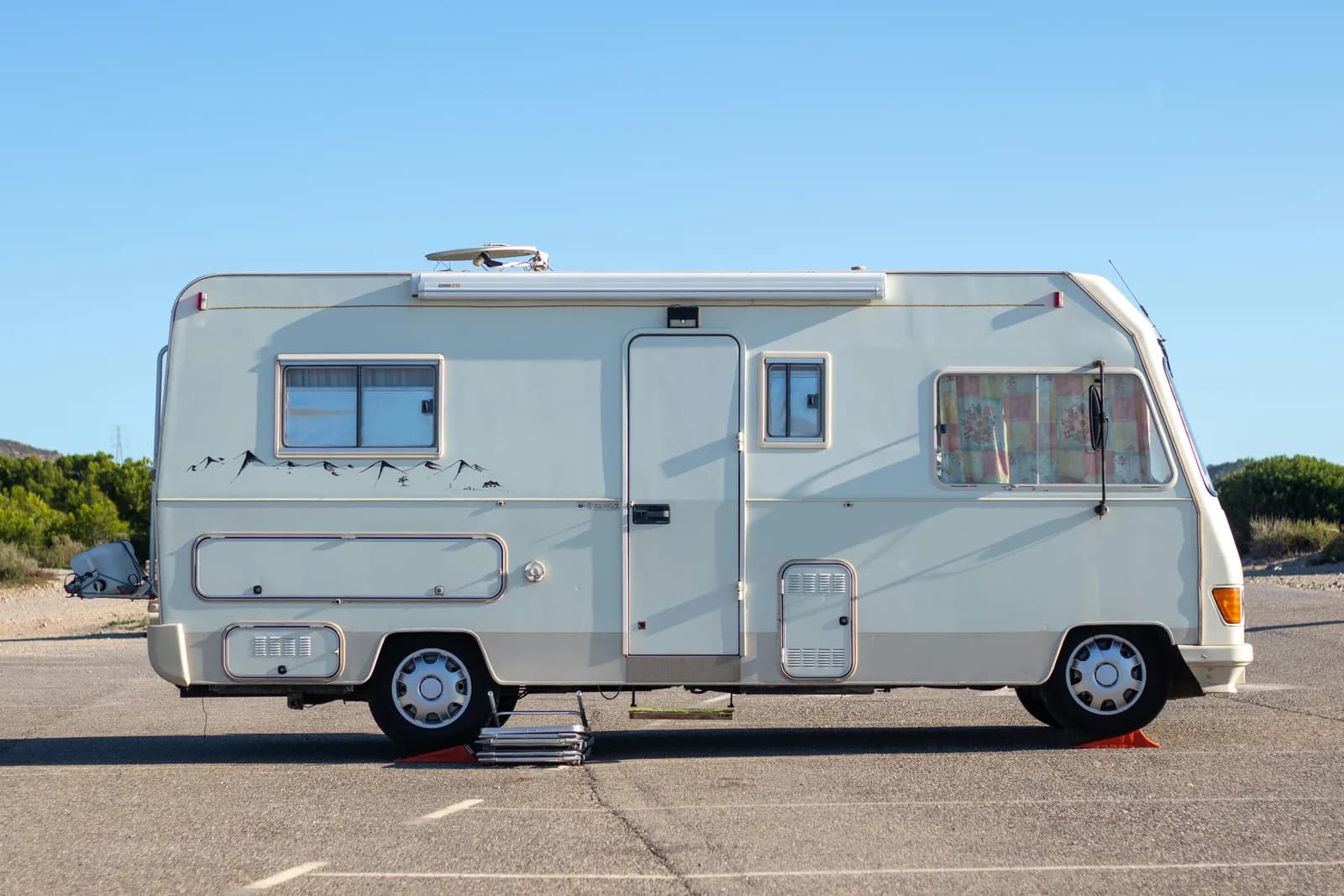
RV detailing is the most under-served corner of the mobile car wash industry. Most car detailers can’t physically handle a 38-foot Class A — they don’t have the ladders, the long-reach extension tools, or the chemistry. The result is a generation of motorhome owners who run their RVs to the carwash bay once a year and watch the fiberglass slowly turn chalky.
This guide explains why RVs need different treatment, the roof work that virtually every owner skips, and how mobile service makes the math actually work.
Why RV Detailing Is Different
The Vertical Surfaces Are Huge
A Class A motorhome has several times the paint surface of a full-size SUV. Detailing time and labor scale with it — a full polish on a large motorhome is a long job done correctly.
The Roof Is The Most-Neglected Surface
Almost nobody looks at their RV roof. It’s out of sight, often rubber EPDM or TPO on Class C and Class A, and has solar panels, vents, AC shrouds and seams that all need attention. UV breaks down roof membrane faster than any other surface, and regular conditioning helps it last.
Oxidation Moves Fast
RV gelcoat and fiberglass panels oxidize faster than automotive paint because they’re large flat surfaces in direct sun. A neglected RV turns chalky within a few years.
Awnings, Slides, And Seals
Side awnings collect mold and mildew. Slide-out seals dry-rot from sun exposure. Both need targeted maintenance most car detailers don’t carry products for.
What A Proper RV Detail Covers
Roof Cleaning And Treatment
Soft-brush wash with EPDM- or TPO-safe cleaner (depending on roof material), seam inspection, and conditioner application. Critical: never use citrus or petroleum-based products on rubber roofs — they degrade the membrane chemically.
Exterior Wash
Two-stage wash: pre-soak with foam, then hand-wash with extended-reach soft brush (an actual telescoping tool, not a household brush). Bug front and grill get a separate dedicated bug remover. Roof-edge transitions where dirt streaks collect get extra attention.
Oxidation Removal And Polish
For chalky fiberglass: compound, polish, then wax or sealant. For full-body paint Class A: paint correction is similar to luxury auto but on a larger scale. Plan a full day for a 38-foot Class A.
Awning Cleaning
Awning fabric gets brushed with awning-specific cleaner, rinsed thoroughly, and dried before retracting. Mold streaks need a separate treatment and sometimes don’t fully come out — but they can be stopped from spreading.
Slide-Out Maintenance
Seals get cleaned and conditioned with rubber conditioner (303 Aerospace or equivalent). Slide topper fabric gets washed. Mechanisms are left to an RV technician — a detailer should report problems, not repair them.
Interior Detail
Same playbook as a luxury car but bigger: vacuum, steam clean carpets, leather conditioning on furniture, kitchen and bathroom deep clean, windows and screens, vent cleaning.
How Often To Detail An RV
- After every trip: Hand-rinse to remove road grime, bugs, and tar. Within 24 hours of returning.
- Quarterly: Full exterior wash, roof inspection, awning rinse.
- Every 6 months: Roof treatment (EPDM/TPO conditioner), seal conditioning, polish/sealant top-up.
- Annually: Full polish + interior deep clean + slide-out service.
Stored RVs that don’t move for 6+ months still need the roof and seals serviced. UV doesn’t care if you’re driving.
Where Most Owners Get It Wrong
Pressure Washing Roofs
Never pressure-wash an EPDM rubber roof. The seal around vents, AC units, and the perimeter is held by lap sealant — pressure spray lifts the sealant and water gets into the roof deck. It is one of the most common preventable RV repairs.
Using Automotive Cleaners On Awnings
Automotive soaps strip the awning fabric’s waterproof coating. Use awning-specific cleaner only.
Buying Chalky Resealer Products Without Compounding
Spray-on "RV restoration" products covered up the problem briefly but bake the oxidation into the surface. Proper compound + polish is the only real restoration.
Ignoring The Rear Cap
The rear of the RV gets the worst UV exposure when parked nose-in. It’s the panel that fades first and the one most overlooked in DIY washes.
Mobile Vs RV Park Wash Bay
Most RV parks have wash bays, but a quick high-pressure spray does little actual detailing work. They’re useful for rinsing road dust between trips, not for actual detailing. The labor an RV needs — roof treatment, polish, awning, slide-out conditioning — only happens with a mobile pro showing up to your storage spot or campground.
Where The Work Happens
Mobile RV detailing can happen wherever the RV is parked and the property allows it:
- Storage facilities that permit on-site detailing (check in with the office)
- Residential driveways (check HOA rules on large vehicles first)
- RV parks and campgrounds that allow outside vendors
A large motorhome needs a flat parking area with safe ladder access. Mention it, with the dimensions and a photo, in your request.
How It's Priced
RVs are priced by length, class, condition and the work you want, so every RV is quoted. Roof treatment, polish, awning and interior work each add time.
Request An RV Quote
RV detailing isn't booked at a fixed price like a car wash. Request an RV detailing quote with the length and class, any slide-outs, roof access, where it's parked and a few photos.
Frequently Asked Questions
How much does mobile RV detailing cost?
RVs are priced by length, class, condition and the work you want, so The Rabbit Wash prices every RV by quote. Send the length, class (A, B or C), any slide-outs, roof access and where it is parked.
Can you pressure wash an RV roof?
No. Pressure washing lifts the lap sealant around vents and AC units on EPDM rubber roofs, which lets water into the roof deck. Always hand-wash RV roofs with a soft brush and roof-safe cleaner.
How often should I treat my RV roof?
Every 6 months for EPDM and TPO rubber roofs, with a UV-protectant conditioner. Inspect lap sealant at the same time — small cracks can be patched before they leak.
Do you detail RVs at storage facilities?
Where the facility allows it. Many storage facilities permit on-site detailing with a check-in, but rules vary, so check with yours. Rabbits bring their own water and power, so no facility hookup is needed.
Related Articles
Beyond Cars
Aircraft & Private Jet Detailing: What Owners And Operators Need To Know
How aircraft detailing differs from cars and boats, the FAA-aware products and procedures, and what hangar-side service looks like in Van Nuys, SNA, and Long Beach.
May 23, 2026 · 5 min read
Beyond Cars
Mobile Boat Detailing In Marina Del Rey, Newport, & Long Beach
What professional boat detailing covers, how often your hull and gelcoat need attention, and what mobile dockside service costs on the Southern California coast.
May 23, 2026 · 5 min read
Beyond Cars
Motorcycle Detailing: How To Clean A Bike Without Damaging Chrome Or Paint
A pro detailer’s sequence for washing and detailing motorcycles — chrome, leather, exhaust, and the cleaning mistakes that ruin finishes faster than riding does.
May 23, 2026 · 5 min read